Some things are worth doing even when you know how fragile they are
Item
-
Post title
-
Some things are worth doing even when you know how fragile they are
-
Publication date
-
226-01-19
-
Post text
-
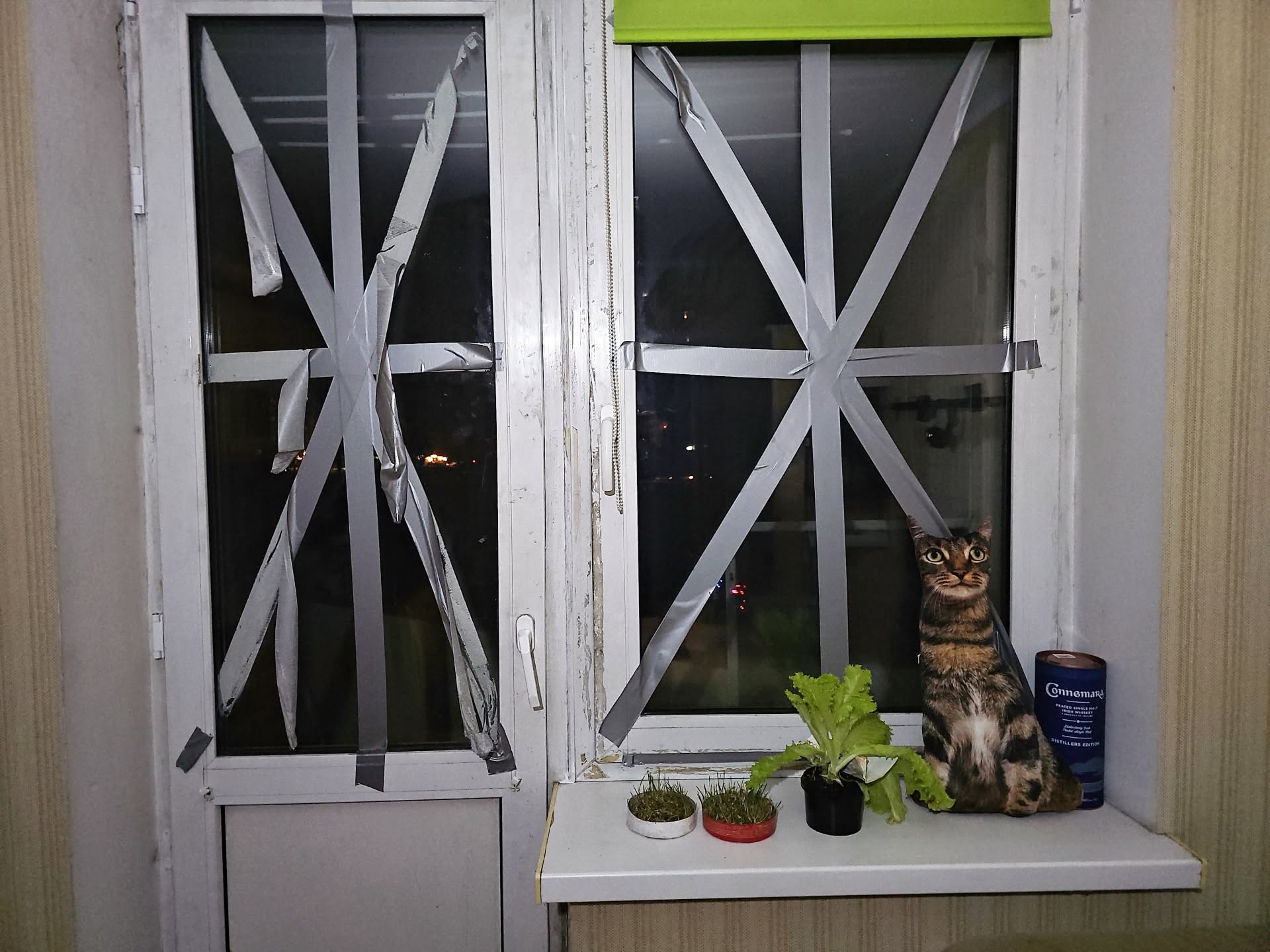
Some things are worth doing even when you know how fragile they are. Today, I’ve been cleaning the apartment, wondering if there was any sense in it, with an attack expected overnight.
We already see their preparations. Multiple unmistakable signs that predict the massive attack soon - maybe tonight. Single drones instead of the usual swarms - reconnaissance flights, mapping infrastructure before something larger follows. Fighter jets are taking off and land repeatedly, including MiGs with their hypersonic ballistic rockets. Missile-carrying ships are moving in and out of the Caspian Sea. Strategic bombers are relocating between airfields. Activity increases on military radio frequencies. Sudden panic on social networks – amplified by Kremlin-linked propaganda, among other things. An American naval patrol airplane is circling above the Black Sea - they monitor Russian military movements and often know more than we do.
There are also the softer indicators. Prolonged “calm” – several days with just a dozen of drones and ballistics - means that the Russians stockpiling for a concentrated attack. Severe cold - they won’t miss the opportunity to leave us without light and heating at 20-degree frost. Sometimes the timing is political. An international visit. Negotiations. A summit. Trump’s “success” in Venezuela. Sometimes it’s just a date that carries symbolic weight for them - like Orthodox Epiphany celebration.
And of course it’s intuition, that has become precise during these four years.
***
The attack begins long before the first explosion – in the Telegram messenger, our main channel for real-time warnings, monitoring, mutual support, and, in fact, survival.
Within the usual nonstop flow of updates on what's flying and where right now, messages of a different type begin to mix in. Too early to say for tonight, closer to midnight it will be clearer. When the drones appear, their routes will unveil expected rockets’ trajectories.
The details begin to accumulate. Strategic bombers are redeployed from the Far East to western airfields. Aircraft are dispersed, then armed, then moved again - equipped with missiles. Two strategic airplanes… Four already… Nine… Numbers grow. They will start from as many as five airfields - the staggering number, even for us, so used to everything. The question is no longer if, but how many and where. And we know the answer. Gradually, the geography narrows. Kyiv. The energy infrastructure. A few western regions as a secondary direction.
By the time night comes, the attack is already fully narrated. We are no longer waiting in ignorance. We are already inside a story that has yet to unfold.
***
The reaction is not the one an outside observer might expect. No single emotional wave, no panic. Everything is quiet and smooth. Mutual support through hundreds of small, familiar messages. Be patient. Charge power banks if you can. Do not ignore air-raid sirens. Nothing new – we have lived through dozens of nights like this, maybe hundreds. Just another ruined Saturday. Only six more Saturdays until spring. “Keep calm, clean your machine guns” - as one of the popular Ukrainian memes says.
Alongside practical advice come injunctions: stop panicking – panic helps the enemy. Don’t forget donating for the army (on nights like this, donations are especially generous).
And omnipresent humor – dark, stubborn, and still lighthearted and harmless. Like jokes about glowing after a nuclear strike – at least we would finally have lightning. Or about the heat released during explosions – maybe we would warm up finally.
These reactions do not deny fear. Yet they somehow domesticate and reorganize it. They fold anticipation into routine, unspoken dread into language. This is how waiting becomes bearable – not by hope, but by shared narration.
When the attack finally begins, this collective narration will not stop. It will continue for hours, until the air-raid signal announces the all-clear – and we will resume daily life, as if this, too, were simply part of the schedule.
***
But all this is still in the future. For now, I am cleaning my house and trying to guess whether it will again be my neighborhood – the one with major power plants.
I never liked household chores, but now they seem meaningful and important in their own way - like in building sandcastles while knowing perfectly well how fragile they are. As if eternity still lay ahead of us. Perhaps, in experience, eternity and a single moment are indistinguishable.
 Ilami Yasna